The Shape
But how do we determine how we shape our shoulder rest; where it should be high or low, how it should be angled, where it should fall on the instrument?
Again, let's look at how the body balances itself, and form the shoulder rest around that balance system.
As viewed from the side, the head's weight passes through the body along a line like this:
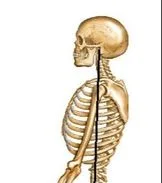
The skull sits atop the top neck bone, right in front of the ears, and the weight passes down
in a curved line, hitting a straight line at key points.
Now, it could stand to reason that the violin's weight and balance point should be aligned as closely as possible with the weight flow line already naturally occurring in the body.
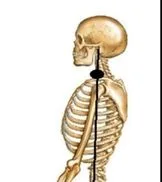
It would make sense for the primary contact point between the instrument and the shoulder to be in line with this weight flow; in other words, roughly at the dot in the picture on the left.
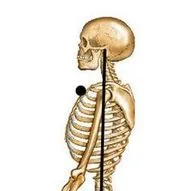
But here we encounter a problem. Shoulder rests can tend to direct the weight of the head and the instrument onto the rib cage, which is a non-weight bearing structure.
We are now out of the natural weight flow zone, and upper body muscles must tighten in order to compensate for the redirected weight flow.